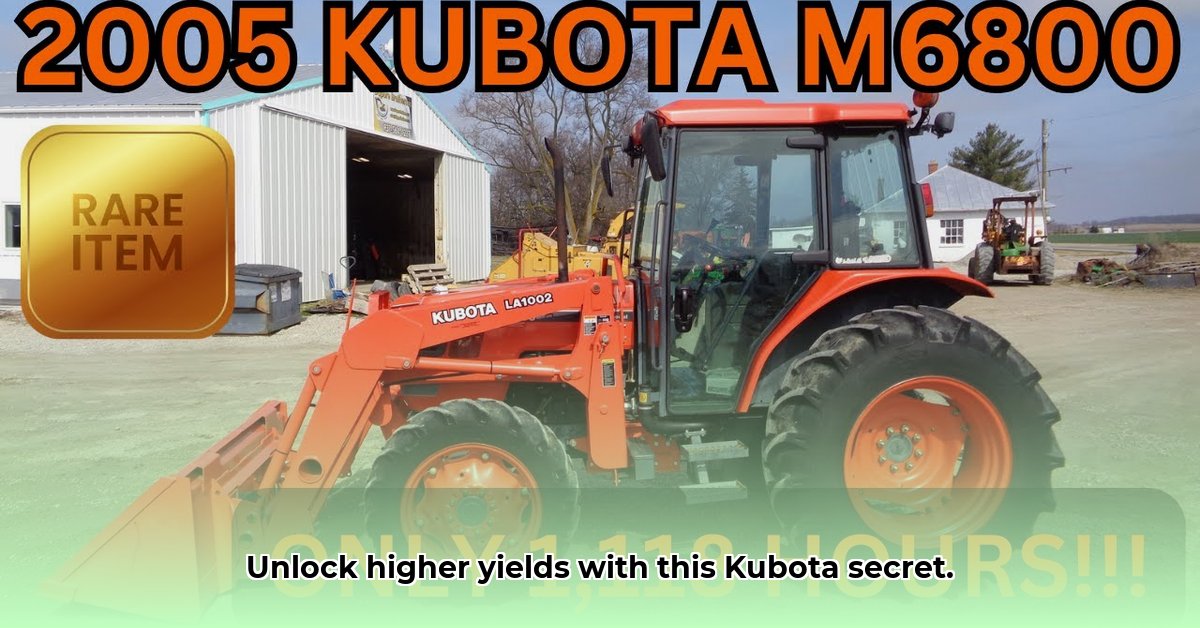
The 2005 Kubota tractor, a reliable workhorse, can be a cornerstone of your sustainable farming operation. This guide provides actionable steps to maximize its efficiency and longevity, contributing to both higher yields and a smaller environmental footprint. We'll explore fuel efficiency, maintenance strategies, suitable attachments, and best practices for sustainable operation. For troubleshooting, check out this helpful resource: Kubota Tractor Problems.
Fuel Efficiency: Maximizing Your Tractor's MPG
Fuel costs significantly impact farm profitability and environmental sustainability. While your 2005 Kubota may not match the fuel economy of newer models, several strategies can dramatically improve fuel efficiency:
Regular Maintenance: Preventative maintenance is paramount. Regularly changing air filters and ensuring proper engine timing are crucial. Neglecting these steps is akin to driving with the parking brake engaged, wasting fuel and stressing the engine. This preventative maintenance significantly impacts fuel consumption.
Tire Pressure Optimization: Under-inflated tires increase rolling resistance, directly impacting fuel consumption. Regularly check and adjust tire pressure to the manufacturer's recommendations. This simple task can yield substantial fuel savings. How much fuel have you wasted due to neglecting tire inflation?
Gear Selection: Choosing appropriate gears for various tasks is vital. Using too high a gear for heavy workloads strains the engine, consuming excessive fuel. Select the appropriate gear based on the terrain and workload. Think of it like using the correct gear on a bike; would you attempt a steep hill in top gear?
Route Planning: Efficient field layouts and minimizing unnecessary travel dramatically reduce fuel consumption. Plan your routes to maximize efficiency and minimize wasted travel time. Strategic route planning can save considerable fuel over a season.
Smooth Operation: Avoid harsh acceleration and braking. Smooth operation minimizes engine strain, reducing fuel waste. This gentler approach also extends the lifespan of your tractor's components. What are the long-term economic benefits of smooth operation?
Maintaining Your 2005 Kubota: A Guide to Longevity
Regular maintenance isn't just about avoiding breakdowns; it's an investment in the longevity and sustainability of your farming operation. By extending the lifespan of your tractor, you reduce the environmental impact associated with manufacturing a replacement.
Oil Changes: Change your tractor's oil and filters according to the manufacturer’s recommendations. This crucial step prevents engine wear and prolongs its lifespan.
Fluid Levels: Regularly check coolant, transmission fluid, and hydraulic fluid levels. Low fluid levels can lead to substantial damage, hence the importance of consistent checks.
Belt Inspections: Inspect belts for cracks, fraying, or excessive wear. Replace worn belts promptly to avoid unexpected breakdowns.
Lubrication: Regularly lubricate moving parts to reduce friction and extend component life. This simple step is often overlooked but offers significant benefits.
Professional Inspections: Schedule annual professional inspections. A qualified mechanic can identify potential problems before they escalate into costly repairs. What is the financial return on preventing a major breakdown?
Attachment Compatibility: Sustainable Tools for Sustainable Farming
The right attachments can dramatically improve the efficiency and sustainability of your farming operation. Consider these options:
No-Till Seed Drills: These drills plant seeds directly into undisturbed soil, reducing soil erosion and promoting healthier soil.
Reduced Tillage Implements: These implements minimize soil disturbance while preparing the seedbed, improving soil health.
Precision Planting Equipment: Precise seed placement reduces seed waste and improves crop yields.
Best Practices for Sustainable Farming with Your Kubota
Successful sustainable farming involves more than just the tractor; it encompasses a holistic approach:
Conservation Tillage: Minimize soil disturbance to reduce erosion and improve soil health.
Crop Rotation: Rotate crops to maintain soil fertility and reduce pest and disease problems.
Cover Cropping: Plant cover crops between main crops to improve soil health and reduce erosion.
Integrated Pest Management (IPM): IPM emphasizes natural pest control methods, minimizing reliance on harmful chemicals.
Is a 2005 Kubota Right for You?
While older tractors offer cost advantages, weigh the trade-offs carefully. The 2005 Kubota is a robust machine, but its higher fuel consumption and potential for increased maintenance costs must be considered. However, with proper care and smart farming practices, the Kubota can be a valuable tool for sustainable and profitable farming.
"A well-maintained 2005 Kubota, coupled with responsible farming practices, can be a sustainable and efficient choice for many farmers," says Dr. Amelia Hernandez, Agricultural Engineering Professor at the University of California, Davis.
Key Takeaways:
- Regular maintenance and optimized fuel consumption are paramount for sustainable farming.
- Selecting appropriate attachments enhances efficiency and reduces environmental impact.
- Implementing sustainable farming practices maximizes yields while minimizing environmental footprint.
- The 2005 Kubota, despite its age, offers a viable and cost-effective option for sustainable agriculture when properly managed.
This guide provides a framework. Consult your Kubota's owner's manual for specific maintenance instructions and always prioritize safety during all tractor operations.